
What is Famille Rose Porcelain? A Complete Guide
Discover fencai — one of China's most celebrated ceramic arts, its history and techniques.
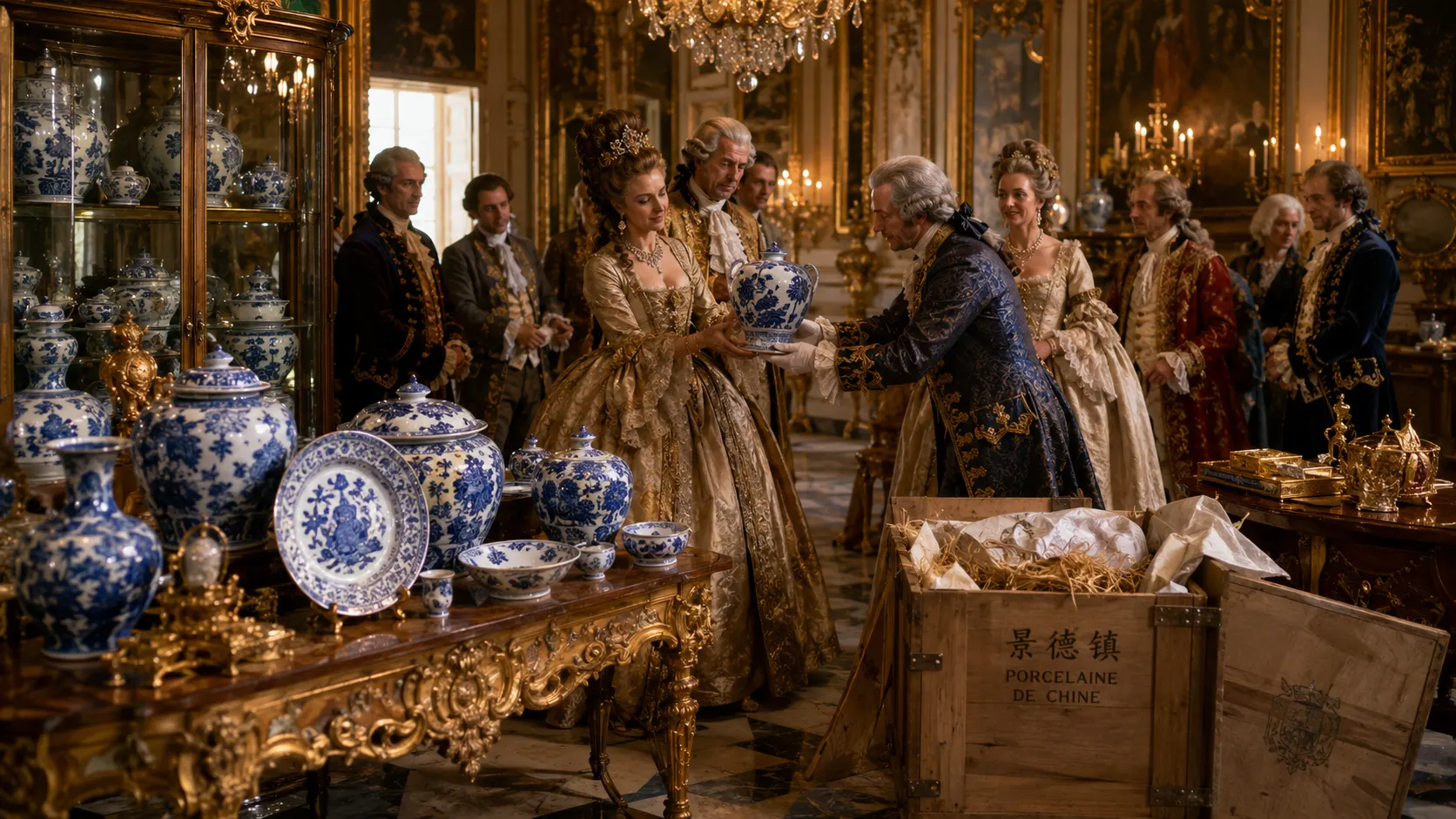
A Brief History of Famille Rose
The famille rose technique emerged during the reign of the Kangxi Emperor (1662–1722) and reached its peak under Qianlong. Coined by 19th-century French collectors, the name refers to the dominant pink hue that sets this palette apart from earlier Chinese enamel traditions.
The technique was introduced to the imperial kilns at Jingdezhen through contact with European Jesuit missionaries, who brought new opaque enamel pigments — particularly a pink derived from colloidal gold. The Kangxi Emperor ordered his craftsmen to experiment with these pigments.
It was under the Yongzheng Emperor that famille rose reached its most refined expression, celebrated for restrained elegance: subtle gradations of color, impeccable composition, and a porcelain body of extraordinary whiteness. The Qianlong era saw decoration become more elaborate and technically ambitious.
How Famille Rose Porcelain is Made
The creation of famille rose porcelain is a multi-stage process. First, the clay body is mixed from kaolin and petuntse, shaped, and bisque-fired at 900°C. Next, transparent glaze is applied, and the piece is fired at 1280°C to vitrify the body.
Opaque enamel pigments are then painted over the glazed surface. These enamels contain metallic oxides mixed with lead-based flux, giving them a soft paint-like quality. The painted piece is fired a third time at a lower temperature (700–800°C) to fuse the enamels to the glaze.
Collecting Famille Rose Porcelain
Imperial-era pieces are museum-level treasures. However, contemporary pieces made at Jingdezhen by skilled artisans offer exceptional quality. Look for hand-painted designs, proper layering of enamels, and confident brushwork that enhances the vessel's form.