Jingdezhen porcelain and the long history of diplomatic gifts
Why Chinese porcelain became a trusted language for ceremony, exchange, and state-level presentation.
Porcelain as a ceremonial object
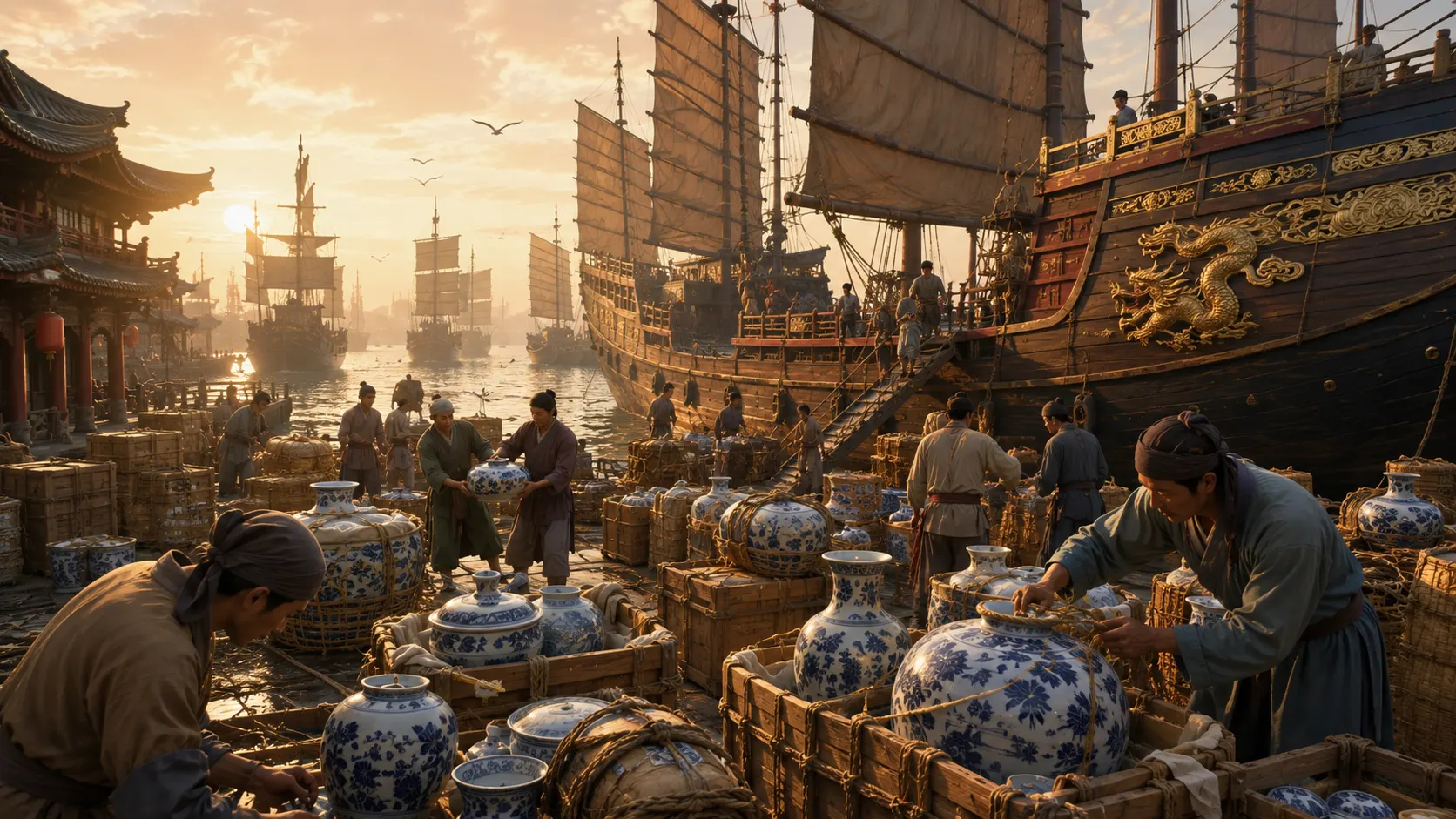
Museum and art-history sources consistently describe Chinese porcelain as a high-value object that travelled widely through trade, collecting, and court taste. That broader history explains why porcelain remains persuasive in ceremonial and gift contexts today.
The V&A notes that Yuan-dynasty potters at Jingdezhen refined clay recipes with kaolin and developed firing technology for blue-and-white porcelain. That technical base is what made Jingdezhen more than a place name: it became a production standard.
Why it travels well across cultures
China Online Museum describes Jingdezhen as the centre of a porcelain industry that produced imperial wares and exported pieces widely. This combination of court quality and global circulation is the reason porcelain can speak across cultural settings.
This is why porcelain remains useful for cultural presentation today: it can be formal without being cold, valuable without being loud, and symbolic without needing a long explanation.